
Minnesota’s B3 Guidelines, or “Buildings, Benchmarks & Beyond,” are an essential set of sustainability and performance standards required for public construction projects within the state. B3 aims to take a holistic approach to creating environmentally-sound buildings, with compliance requirements ranging from energy efficiency to occupant health and material waste.
Minnesota B3 Compliance Overview
One of the most critical components of B3 is Section I.2, which addresses moisture and air infiltration. Given Minnesota’s climate—ranging from humid summers to freezing winters—controlling moisture and air is essential for energy efficiency, indoor air quality, and the longevity of the structure. Section I.2 is broken down into three main requirements:
- I.2.A: Bulk Water Control
- I.2.B: Moisture Safe Design
- I.2.C:Moisture Safe Construction
Guidelines I.2A and I.2C are required for all B3 projects with an exterior envelope included in the project scope. Guideline I.2B is also required if the building includes 20,000 gsf or more of conditioned space.
B3 Requirement I.2.A: Bulk Water Control
Guideline I.2.A focuses on managing liquid water from exterior sources like rain and snow. The guideline specifies prescriptive measures such as site grading, irrigation design, and drainage systems like gutters and downspouts to prevent water from penetrating the building envelope.
B3 Requirement I.2.B: Moisture Safe Design
Guideline I.2.B emphasizes the importance of designing wall assemblies to prevent condensation and manage moisture diffusion. Project teams are required to perform a qualitative moisture analysis for all above-grade walls. A quantitative moisture analysis using one of the following methods is also required if the wall does not follow the Perfect Wall assembly:
- The Glaser Method: All wall layers must remain below the saturation vapor pressure when modeled at the average exterior winter temperature and humidity and the highest anticipated interior temperature and humidity.
- WUFI Software: The wall’s total moisture content must achieve a declining or stable moisture content pattern over three years while the sheathing meets the mold growth criterion.
B3 Requirement I.2.C: Moisture Safe Construction
Guideline 1.2.C primarily involves controlling air leakage, as this is a major cause of moisture-related damage. Most B3 projects must pass a whole-building air tightness test, with a maximum allowed air leakage rate of 0.25 cubic feet per minute per square foot (cfm/sf) at 75 Pascals. If the rate exceeds this limit, diagnostics using smoke or infrared imaging are required, and retesting is necessary after remediation.
Alternatively, projects can forgo the air tightness test if they engage a building envelope consultant throughout the scope of the project. This consultant can help facilitate effective air barrier design and implementation, reducing moisture risk and enhancing overall performance.
B3 Consulting Services
Successfully applying B3 Guidelines to a project requires a range of experts, from architects and engineers to contractors and energy modelers. However, typical design and construction disciplines may lack specialized training in envelope systems and building science. Adding a building envelope consultant to the project team bridges this gap and can elevate your project to meet and exceed B3 standards.
Waiving air tightness testing is just one advantage to including a building envelope consultant on your B3 project. The CopelandBEC team brings expertise in moisture analysis and can provide all the necessary services to meet the B3 moisture safe design and construction requirements. Beyond Section I.2., CopelandBEC can also enhance the overarching performance goals of B3 by participating in design reviews, performance testing, and field observations throughout the project lifespan.
Engaging an enclosure consultant throughout your B3 project not only simplifies compliance but also helps create a practical and durable building envelope, which extends the building’s lifespan, reduces operational costs, and improves resilience in the midst of Minnesota’s challenging climate.
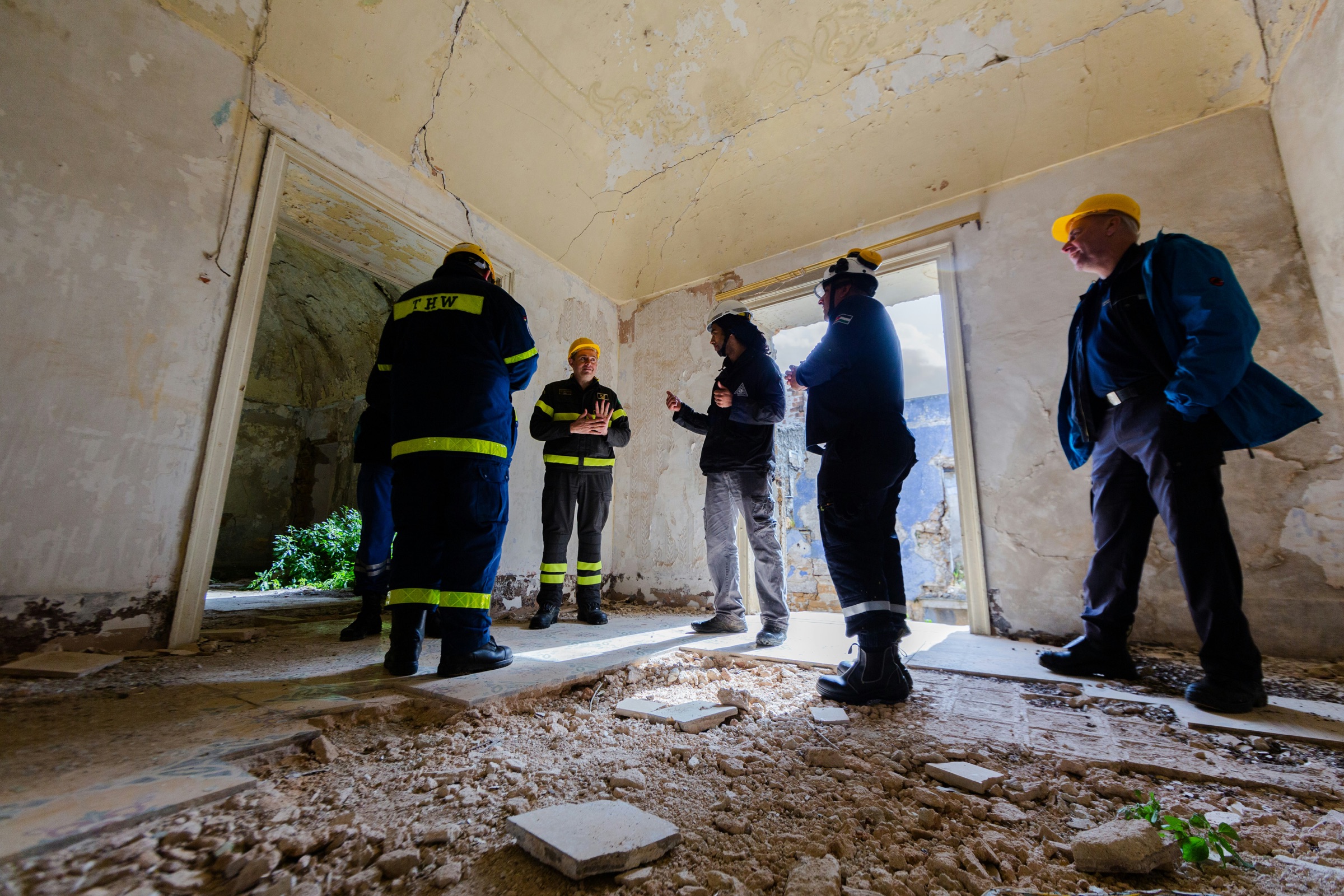
Photo by ThisisEngineering on Unsplash
Talk to a building envelope consultant
We help owners, design teams, and attorneys think through roofing, commissioning, and litigation questions. Tell us about your project and we’ll point you in the right direction.
Schedule a consultation