
In a reality where funding is scarce and resources are limited, how can you best allocate those dollars to care for your most valuable assets?
Status quo: deferred maintenance
Much of the time, proactive maintenance is viewed as a cost. Those inspections and routine repairs are perceived as money out the door. This widely-held perception has led to deferred maintenance becoming the norm for many facilities.
Deferred maintenance is the practice of postponing maintenance activities such as repairs… in order to save costs, meet budget funding levels, or realign available budget monies. The failure to perform needed repairs could lead to asset deterioration and ultimately asset impairment. Generally, a policy of continued deferred maintenance may result in higher costs, asset failure, and in some cases, health and safety implications. (Wikipedia, emphasis added)
What if, instead, we could better tell the story of how investments in proactive maintenance are not costs but actually grow the bottom line?
The ROI of being proactive
Let’s look at a simple example.
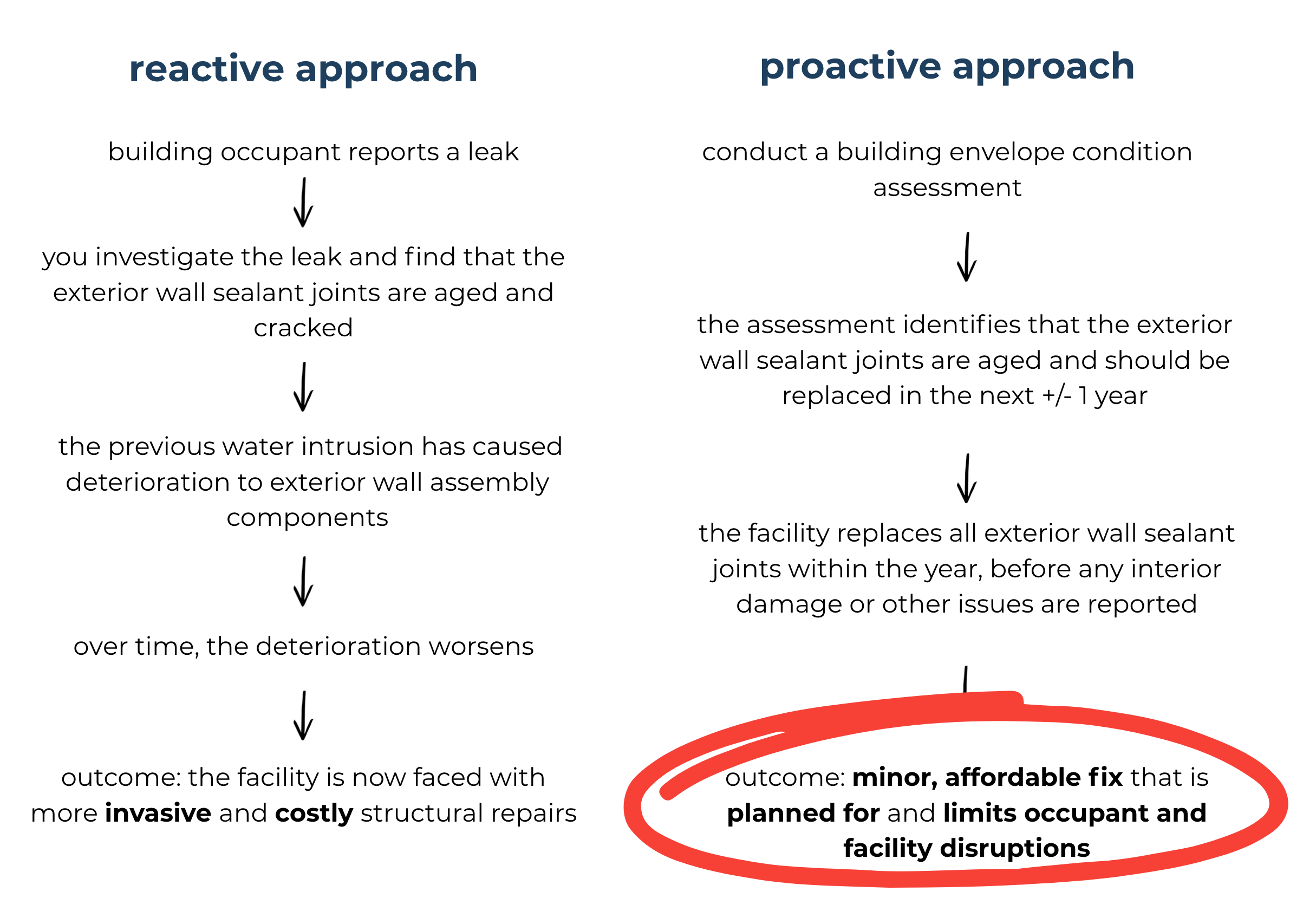
In one case, imagine a building where little proactive maintenance is done. Issues are dealt with as they come up. In this building, when a leak is discovered, it’s possible that the water has been causing damage for some time. Now instead of only needing to repair the failed sealant, roofing, or flashing you also need to replace rotted wood or corroded metal, or perhaps mitigate some mold growth.
On the other hand, imagine a similar building that undergoes routine high-level inspections. The inspections flag concerning issues that warrant further attention, and these issues are investigated and repaired if needed—before they cause bigger problems. These repairs are relatively inexpensive and much less disruptive than chaotic, unplanned emergency repairs.
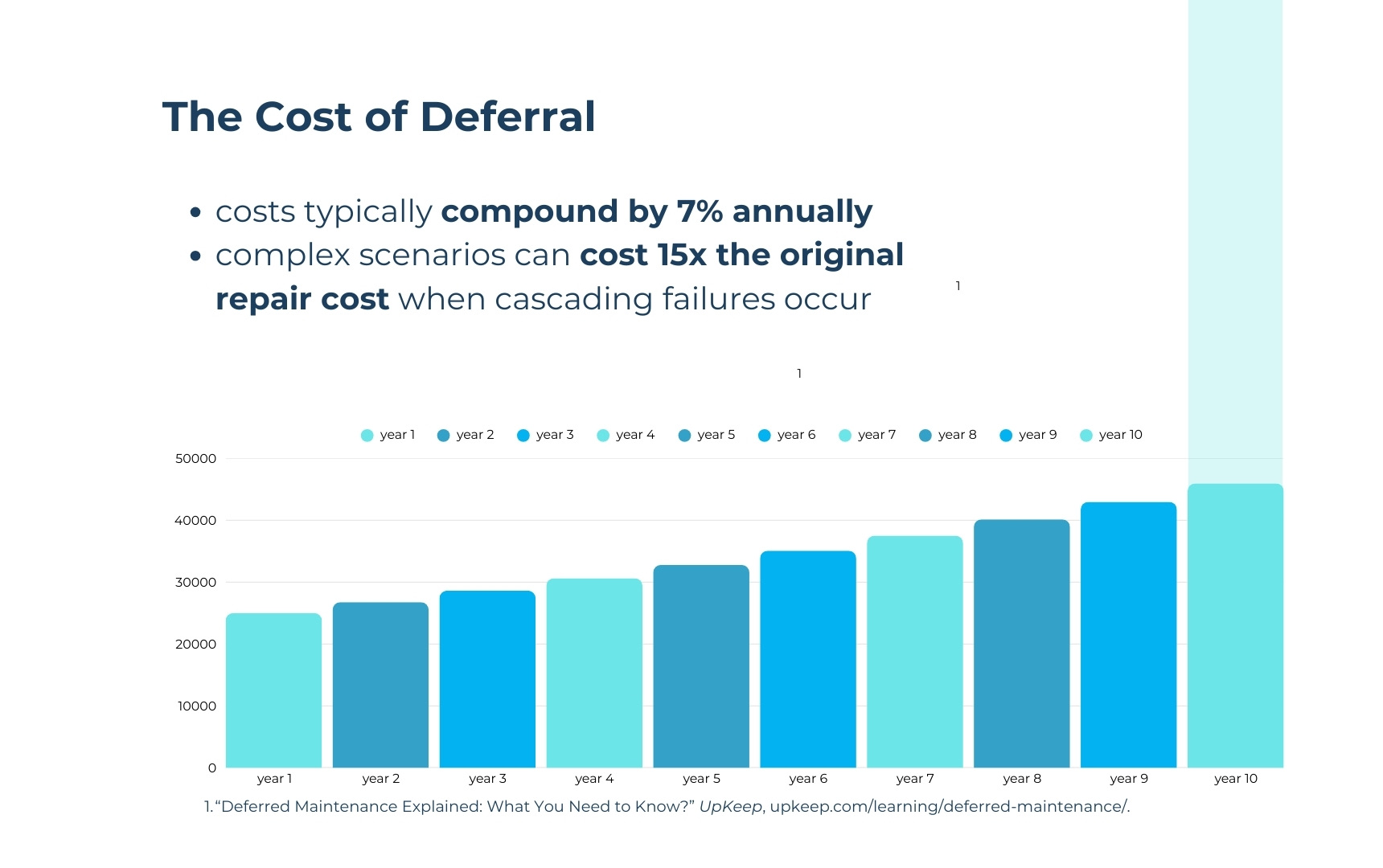
What does this translate to in terms of actual expenditures? Well, one study found that deferred maintenance costs typically compound at 7% per year. But the real kicker? Costs can skyrocket to 15x the original repair cost when cascading failures occur (like when water leaks cause structural damage, for instance).
In an analysis of 14 million square feet of commercial properties, another study found that preventive maintenance delivers a return on investment (ROI) of 545% over 25 years.
Targeting a 545% return vs. gambling with an unexpected 1,500% cost seems like a sound financial strategy, no?
Join about 1,300 better building enthusiasts and receive our occasional newsletter Back of the Envelope. Cancel anytime.
Using building envelope condition assessments to guide capital planning
Proactively caring for your building assets starts with paying attention to the building envelope. The envelope is the building’s first line of defense, and wisely applying resources to its care is a powerful way to leverage limited funds.
A building envelope condition assessment provides a high-level overview of the current state of affairs. The goal is to give you the information you need to plan and strategically allocate resources in the most impactful way.
Like going to your family doctor for an annual physical, the condition assessment is a routine checkup best done regularly. Findings from each assessment are fed into an ever-evolving care plan that dynamically adjusts to allocate resources where they’re needed most.
Investing in asset management
Implementing a rational asset management strategy does not need to be complicated or even expensive when put into the context of a building’s entire lifecycle and seen with an investment rather than cost lens.
If you are planning to own your building for more than a few years, we would love to help you develop the right asset management strategy that uses high quality information to guide proactive maintenance—and start targeting a return on investment instead of gambling with unpredictable emergency repair costs.
Talk to a building envelope consultant
We help owners, design teams, and attorneys think through roofing, commissioning, and litigation questions. Tell us about your project and we’ll point you in the right direction.
Schedule a consultation